Home / Knowledge base / Iron deficiency
Iron & blood · guide

Iron deficiency

Nearly 2 billion people live with a shortage of iron — the most common micronutrient deficiency on Earth. Here's why your body needs iron, how a deficiency builds silently across three stages, which symptoms and tests actually matter, and who is most at risk. To gauge your own status, take the iron deficiency assessment.
3–4 gof iron in the body 3stages of deficiency 5key blood tests ~8 minread
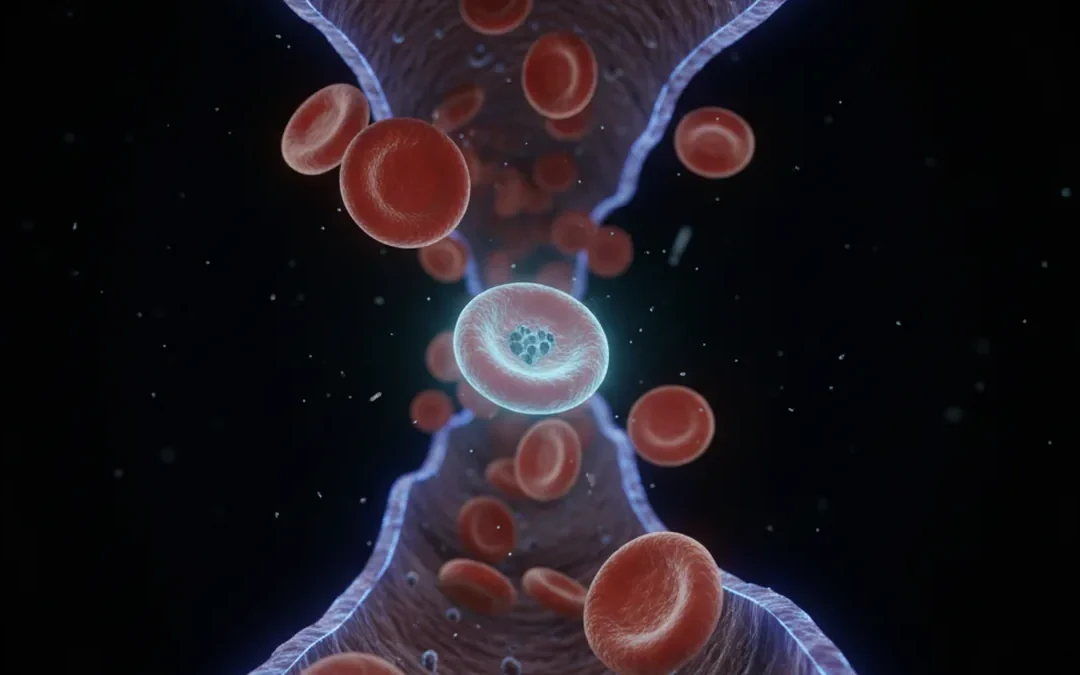
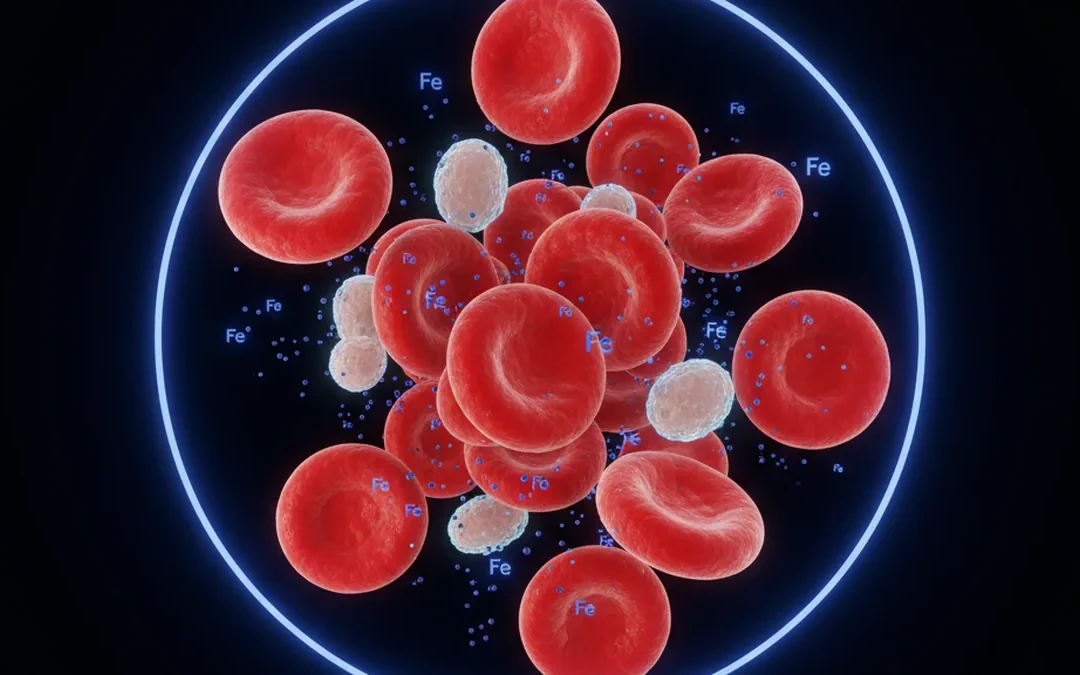
Red blood cells and iron metabolism
~2bn
people worldwide live with iron deficiency
30%
of reproductive-age women experience iron-deficiency anemia
#1
the most common nutritional deficiency in the world
65%
of the body's iron sits in hemoglobin, which carries oxygen

Why the body needs iron

An adult body holds just 3–4 grams of iron — less than an ordinary nail. Yet that trace amount decides whether you can think, move, and fend off infection. Iron does four fundamental jobs:

cardiology
Oxygen transport
65% of your iron sits inside hemoglobin and myoglobin — the proteins that ferry O₂ from the lungs to every cell.
bolt
Energy production
Iron–sulfur clusters in your mitochondria drive the electron transport chain — the main source of ATP.
shield
Immune defense
Iron is needed to mature T cells and neutrophils. When it runs low the immune response weakens and infections come more often.
neurology
Brain function
Iron helps build dopamine and serotonin. A shortfall dulls focus and sharpens irritability.
lightbulb
Hepcidin is the master regulator of iron. This liver hormone controls how much iron the gut absorbs. During chronic inflammation hepcidin spikes and slams the door on iron uptake — even when the body is genuinely short. That's anemia of chronic disease, which often masks the true picture.

The three stages of iron deficiency

Deficiency builds gradually. Most people never notice the first two stages — until iron-deficiency anemia finally announces itself with unmistakable symptoms.

01
Iron depletion
Ferritin ↓ Hb normal MCV normal

Reserves drain away and ferritin drops below 30 ng/mL, while hemoglobin still reads normal. Symptoms are minimal — maybe some mild fatigue. This is the easiest stage to catch and correct. A hidden iron deficiency test gauges your risk from symptoms, and the assessment calculator helps you read your labs.

02
Iron-deficient erythropoiesis
Ferritin ↓↓ Saturation ↓ MCV ↘ TIBC ↑

Stores are exhausted and hemoglobin production falters. Red blood cells shrink (microcytosis) and pale. Fatigue mounts, concentration slips, and exercise starts to feel harder.

03
Iron-deficiency anemia (IDA)
Hb ↓↓ Ferritin ↓↓↓ MCV ↓ TIBC ↑↑

Anemia: hemoglobin below normal (♀ <12, ♂ <13 g/dL). The symptoms are pronounced — breathlessness, marked weakness, pallor, palpitations. This stage needs treatment under medical supervision.

Symptoms you shouldn't ignore

The signs of deficiency are easy to write off as ordinary tiredness. But when several linger longer than 2–3 weeks, it's worth getting tested or taking a symptom-based test.

bedtime
Chronic fatigue
Doesn't lift after rest. Seen in about 90% of people with iron-deficiency anemia.
air
Shortness of breath
On everyday exertion and climbing stairs — tissues aren't getting enough oxygen.
face
Pallor
Pale skin and inner eyelids are a reliable clinical sign of anemia.
ac_unit
Cold hands and feet
Impaired peripheral circulation as oxygen delivery drops.
content_cut
Hair loss
Follicles divide rapidly and are among the first tissues to feel an iron shortfall.
back_hand
Brittle nails
Koilonychia (spoon-shaped nails) is a sign of advanced deficiency.
cognition
Brain fog
Trouble concentrating, weaker memory, and reduced productivity.
directions_walk
Restless legs
Uncomfortable sensations at night — linked to low ferritin in about 25% of cases.
ac_unit
Pica — the craving for ice and non-food items. The urge to chew ice, chalk, or dirt is one of the most specific signs of iron-deficiency anemia, and it fades once the deficiency is corrected.

Five key blood tests

Together these markers paint a full picture of iron metabolism. The best starting panel is ferritin plus a complete blood count (which delivers hemoglobin and MCV).

Ferritin> 30 ng/mL (optimal 50–150)

The storage protein that holds your iron reserves. The best early marker — it falls long before hemoglobin does.

Stores depleted< 12
Suboptimal12–30
Normal> 30
Hemoglobin (Hb)♀ 12–16 / ♂ 13–17 g/dL

The main protein in red blood cells. It only drops at a late stage — once reserves are long gone.

Severe anemia< 8
Moderate anemia8–10
Normal♀≥12 / ♂≥13
MCV — red cell volume80–100 fL

The size of your red cells. In deficiency they shrink (microcytosis) and pale. Included in the CBC.

Marked microcytosis< 75
Mild microcytosis75–80
Normal80–100
Transferrin saturation20–50%

The share of transferrin loaded with iron. Below 16% is a confident sign of deficiency.

Marked deficiency< 16%
Reduced16–20%
Normal20–50%
TIBC — total iron-binding capacity250–370 µg/dL

How much iron transferrin can bind. In deficiency it rises — the body makes more transferrin to catch every atom of iron.

Elevated (deficiency)> 370
Normal250–370
Low (inflammation)< 250

Who's at risk

Some people are especially vulnerable — through greater losses, reduced absorption, or higher demand.

female
Women of reproductive age

Monthly menstrual losses run 15–45 mg of iron. Heavy bleeding drives the risk up sharply.

pregnant_woman
Pregnant and breastfeeding women

Requirements climb from 18 to 27 mg a day. Deficiency in the first trimester raises the risk of preterm birth.

eco
Vegans and vegetarians

Plant-based (non-heme) iron is absorbed 3–5 times less efficiently. Keep an eye on ferritin.

directions_run
Athletes

Losses through sweat, foot-strike hemolysis while running, and micro-bleeding in the gut. Marathoners lose iron faster.

gastroenterology
People with GI conditions

Celiac disease, Crohn's disease, and ulcerative colitis impair absorption. Antacids cut iron uptake by 40–70%.

bloodtype
Blood donors

A single donation (450 mL) removes 200–240 mg of iron. Frequent donations without correction lead to deficiency.
check_circle
Vitamin C doubles iron absorption. Pair iron with vitamin C (citrus, kiwi, peppers) and skip tea, coffee, and dairy for an hour around the meal — they block absorption by 40–70%.
calculate Tool · assessment from your labs Iron deficiency assessment Enter your ferritin, hemoglobin, and other markers to get your iron status, your deficiency and anemia risk, and tailored guidance. Open the calculator

Related reading

The rest is subscription-only

This section is available on a higher plan. Get access to unlock all materials.