Cognitive aging: the brain, memory, and dementia risk
Up to 45% of dementia cases are tied to factors you can change. Let's break down the three
states of the brain, the biology of cognitive aging, and what really works to protect
memory and thinking.
45%preventable3brain states4mechanisms~10 minread
45%
of dementia cases are potentially preventable (Lancet, 2024)
55M
people worldwide live with dementia — a new case every 3 seconds
15–20yrs
brain changes begin long before the first symptoms appear
3
brain states: normal → MCI → dementia
Where normal ends
With age, almost everyone notices it: harder to concentrate, longer to recall a name or a word,
tougher to switch between tasks. Most of the time this is normal. The real problem is different —
the line between normal cognitive aging and the start of a pathological process isn't always
obvious. People either ignore the first signals or treat every lapse of memory as dementia. One
separate angle on the topic is your
mental age: how "mature" your mind feels.
neurology
Medicine draws a clear line between three states.
Normal cognitive aging,
mild cognitive impairment (MCI),
and dementia. What sets them apart isn't how they feel, but objective measures — their impact
on everyday life and the results of neuropsychological tests.
The three states of the brain
The key criterion in every case is the same — the impact on functional independence.
Normal
Normal cognitive aging
Taking a little longer to recall words and names
Learning new information more slowly
Finding it harder to juggle several tasks at once
Independence fully intact
Elevated risk
Mild cognitive impairment (MCI)
Changes that people around you start to notice
Repeated questions and mistakes
Trouble remembering recent events
Independence preserved, but the changes are noticeable
Clinical syndrome
Dementia
Disorientation in familiar surroundings
Difficulty with speech and reasoning
Loss of decision-making ability
Everyday life is disrupted and help is needed
warning
MCI is the most important window for intervention.
In some people MCI doesn't progress, and in some it even improves. But left unattended, the risk
of developing Alzheimer's disease and other forms of
dementia is far higher than the population average.
Why the brain ages: four mechanisms
Cognitive aging is the product of several parallel biological processes. They're interconnected
and reinforce one another.
local_fire_department
Neuroinflammation
Chronic inflammation damages neurons
arrow_forward
bloodtype
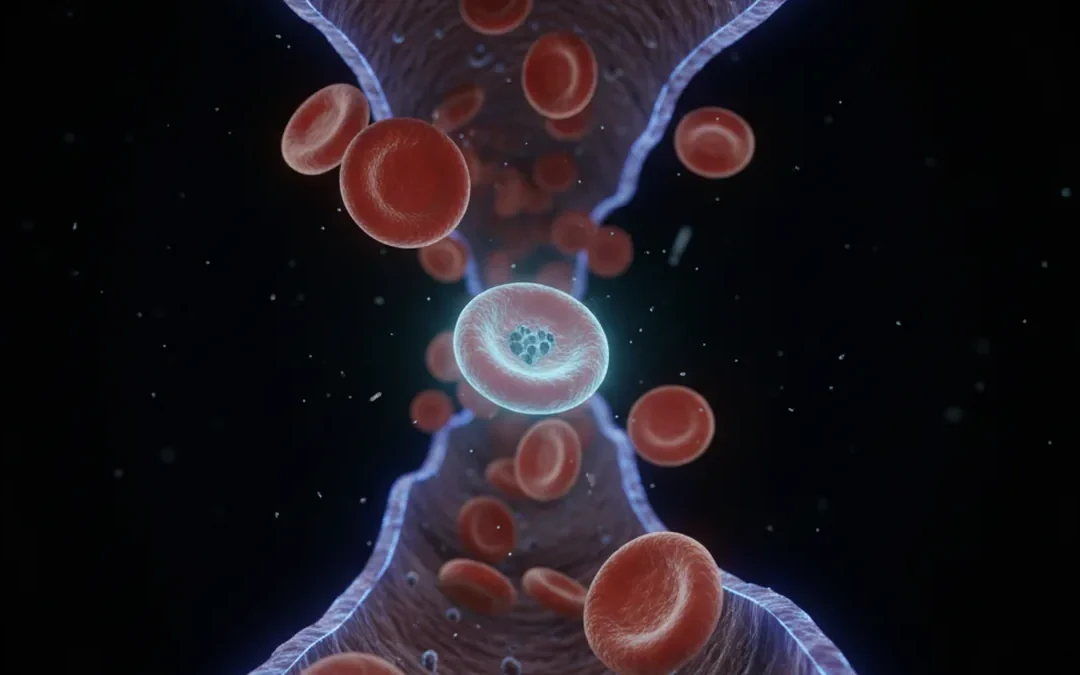
Vascular dysfunction
Less oxygen and nutrients reach the brain
arrow_forward
bolt
Metabolic disruption
Energy metabolism in neurons breaks down
arrow_forward
biotech
Neurodegeneration
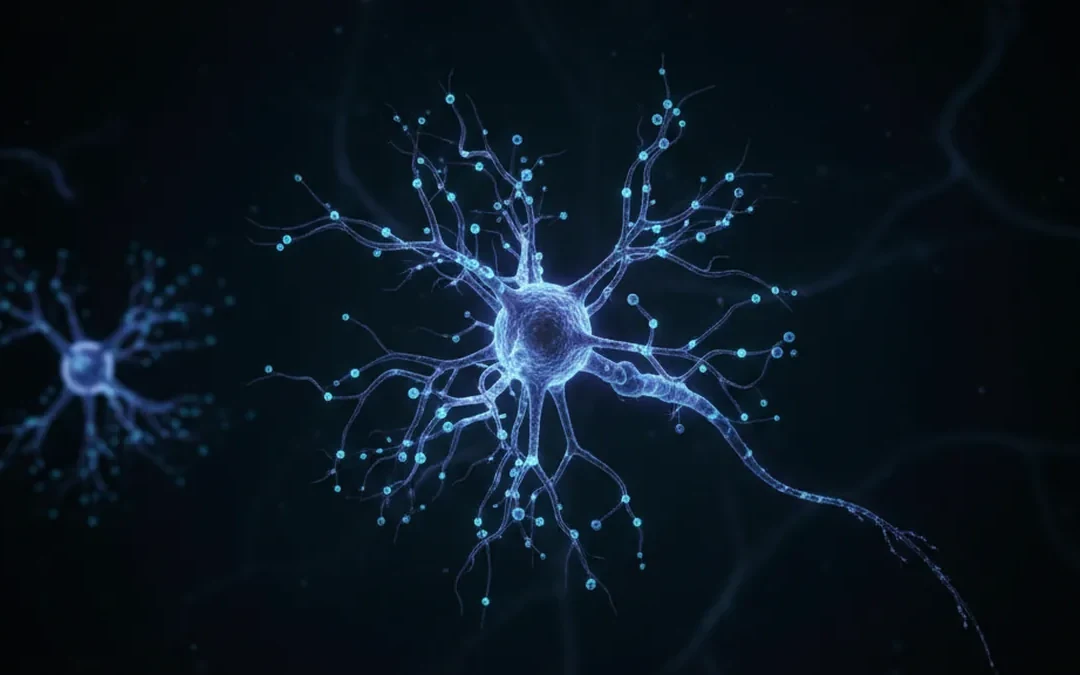
Pathological proteins build up and cells die
Neuroinflammation gradually damages
neurons and disrupts the connections between them. Vascular problems
cut the oxygen supply — and the brain, though just 2% of body mass, burns roughly 20% of the
body's energy. Metabolic disruption includes mitochondrial dysfunction
and insulin resistance. In the final stage comes
neurodegeneration: the buildup of
β-amyloid and tau protein begins 15–20 years before the
first symptoms. Every one of these processes is accelerated by
oxidative stress — neurons are especially
vulnerable to it because of their high metabolic activity.
What actually shapes the risk
45%
of dementia cases are linked to modifiable risk factors — the ones you can
influence. A large share of the risk is not genetically predetermined.
Lancet Commission on Dementia Prevention, 2024
The 2024 Lancet Commission report pulls together data from dozens of studies and organizes the
risk factors into four groups.
monitor_heart
Vascular factors
Hypertension
Diabetes
High LDL cholesterol
Obesity
directions_run
Lifestyle
Physical inactivity
Smoking
Excessive alcohol
Poor sleep
psychology
Psychosocial
Depression
Social isolation
Low education
Chronic stress
hearing
Sensory impairment
Hearing loss (uncorrected)
Vision loss
Traumatic brain injury
Air pollution
hearing
Hearing loss was underrated for a long time.
Uncorrected hearing loss speeds up cognitive decline by reducing the load on the brain and
cutting social engagement. A hearing aid, when it's needed, isn't about appearances — it's
neuroprotection.
The brain keeps its neuroplasticity for life — the way you live directly shapes how fast cognitive aging happens.
What actually lowers the risk
The recommendations overlap heavily with cardiovascular prevention — and that's no coincidence.
The health of your blood vessels directly determines the health of your brain.
directions_run
Physical activity
The single most reliable protective factor: it improves blood flow to the brain, lowers neuroinflammation, and stimulates the growth factor BDNF. Just 150 minutes of moderate activity a week is enough.
monitor_heart
Blood pressure and glucose control
Hypertension and diabetes are leading vascular factors. Lowering systolic blood pressure below 130 mmHg in midlife measurably reduces dementia risk.
menu_book
Cognitive engagement
Builds cognitive reserve — the brain's resilience to damage. Languages, reading, learning something new. The brain stays plastic for life.
groups
Social activity
Isolation is an independent risk factor. Connection keeps the mind engaged and eases stress and depression. The quality of your relationships matters more than their number.
bedtime
Sleep quality
During deep sleep the brain clears out toxic metabolites through the glymphatic system, β-amyloid among them. Chronic sleep deprivation is a proven risk factor.
restaurant
Nutrition and metabolism
The Mediterranean and MIND diets are linked to lower dementia risk: they reduce inflammation and oxidative stress. Weight control is critical from midlife onward.
Normal, or a warning sign?
The key question is whether the change disrupts everyday life. If it does, that's a reason to see
a neurologist or geriatrician.
check_circle Normal aging
You sometimes forget a name but recall it later
You need more time to learn something new
You occasionally lose your train of thought in a conversation
You've become slower to make decisions
Now and then you forget why you walked into a room
error Reasons for concern
You forget important events that others remember
You repeat the same questions
You get lost in familiar places
Word-finding trouble has become more frequent
You struggle with planning and managing money
visibility
If the people around you notice the changes — not just you — that's an especially important
signal. MCI is often not taken seriously precisely because the person still lives independently.
Yet this is exactly the stage where intervention works best.
Screening: when and why
Population-wide screening of people without symptoms is not recommended — there
isn't enough evidence of benefit (USPSTF, 2020). But when there are complaints, a family history
of early dementia, or a suspicion of MCI, assessment becomes essential. The main tools are the
MoCA and MMSE tests, MRI, and — at specialized centers — measurement of amyloid levels. For a
quick self-check without lab work, try the fast
cognitive age test.
lightbulb
Bottom line. Cognitive aging is a complex but manageable process. It isn't
chance and it isn't only genetics — it's the result of vascular, metabolic, and behavioral
factors, most of which you can change. The earlier you start, the better your odds of keeping
a clear mind for decades.
We use cookies to keep you signed in and to remember this choice. We do not run third-party advertising or analytics trackers.
Learn more about our privacy policy