Intermittent Fasting and Aging, Minus the Hype
It's one of the most talked-about ways to "stay young longer." Let's take the hype out of it: what actually happens in the body during a break from eating, how much of that is genuinely proven in people — and, just as importantly, who should never try it.
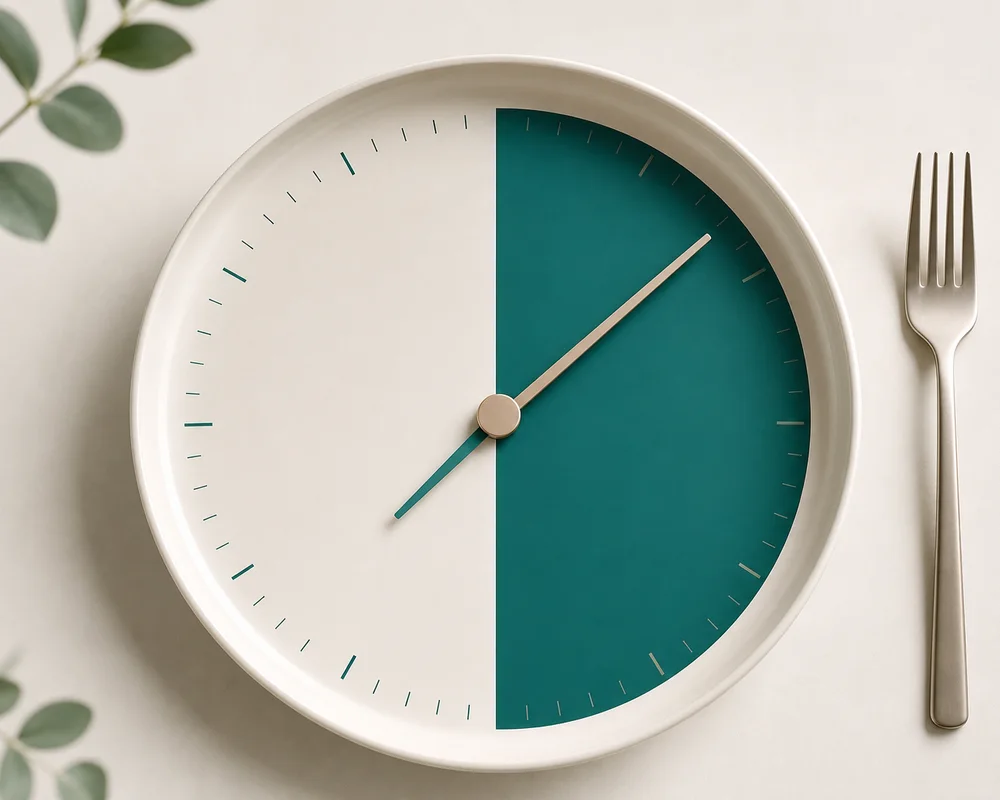
Intermittent fasting isn't about what you eat — it's about when. You gather your meals into a limited window and let the body rest from food the rest of the time. This isn't about multi-day fasts or putting yourself through misery; it's simply about extending the ordinary overnight gap between dinner and breakfast.
Why all the noise around it? Because a break from eating switches on the cellular "cleanup and repair" processes that scientists tie directly to slower aging. One of them — autophagy — earned the Japanese scientist Yoshinori Ohsumi the 2016 Nobel Prize in Physiology or Medicine for uncovering how it works. That's the moment fasting stopped being a fitness tip and became a subject of serious scientific debate.
But it's worth drawing a line right at the start. A beautiful mechanism in a test tube or in mice is one thing; a proven benefit in a living human being is quite another. In this guide we'll lay out both honestly: which protocols exist, what really happens in the body, what's been proven and what hasn't — and, separately and importantly, who should not fast at all.
The main protocols
"Intermittent fasting" is an umbrella term for several schedules that vary a lot in how strict they are. The shared idea is simple: eat within a defined window, and the rest of the time drink water and don't eat. What differs sharply is the length of the window and how often you do it.
- 16:8. Sixteen hours without food and an eight-hour eating window (say, noon to 8 p.m.). The gentlest and most popular version: in practice you're just skipping breakfast or an early dinner.
- 5:2. Five days of normal eating and two days a week with sharply cut calories (around 500–600 kcal). There's no true fast, but for two days the body runs a noticeable deficit.
- Alternate-day fasting. Alternating a normal day with a day of minimal calories. It works well in studies, but it's harder to tolerate and isn't for everyone.
- 12:12 — for beginners. Simply not eating for 12 hours, sleep included. Technically this isn't even "fasting" but a normal routine — and it's exactly where you should start, so the body gets used to the gaps.
- Fasting is about when you eat, not what you eat.
- The popular protocols are 16:8, 5:2 and alternate-day fasting.
- Beginners are better off starting with a gentle 12:12.

What happens in the body during a fast
To understand fasting's appeal, it helps to picture what the body is doing right after a meal and then without one. While food is coming in, the body runs in "storage" mode: it absorbs nutrients and tucks them away for later. When the break stretches on, it shifts into "maintenance and repair" mode. Simplified, it unfolds over a few stages:
- The first hours. Insulin is at work, glucose from food goes into cells and into storage (glycogen). This is the absorption phase.
- A few hours in. Insulin drops, glycogen stores run low, and the body increasingly pulls its energy from fat.
- Around 12–16 hours. Cellular "waste removal" — autophagy — ramps up, a mild ketosis builds, and metabolism shifts into a thrifty, restorative gear.
The key "switches" here are the very same ones that show up in the science of aging in general. Insulin falls — the opposite of insulin resistance, where diabetes begins. The growth sensor mTOR, which in a constantly "fed" state drives cells to divide and suppresses self-cleaning, quiets down. And the "energy gauge" AMPK switches on, moving metabolism into an economical mode. In essence, fasting is a way to give the body a short spell of working on repair rather than growth.
- In the pause, the body shifts from "storing" to "cleanup and repair."
- Insulin and mTOR fall while autophagy — the clearing of cellular junk — ramps up.
- These are the same processes tied to slower aging.
What's proven, and what isn't yet
Now for the most important part — honestly separating an elegant theory from results in living people. This will disappoint a few readers, but it's better to know the truth.
- It helps with weight loss. Proven: in studies people typically lose around 3–8% of body weight over 8–12 weeks (a BMI calculator helps you track it). The mechanism is mundane — in a narrow window people naturally eat less than with all-day access to food.
- It improves lab markers. In many studies fasting blood sugar, insulin sensitivity (conveniently gauged with the METS-IR index), blood pressure and blood lipids all get better.
- But it's no more "magical" than a plain calorie deficit. A head-to-head trial showed that for weight loss, fasting works about as well as simply counting calories every day. Its edge isn't magic but convenience: for some people, not eating until midday is easier than tracking calories all day long.
- Extending human lifespan isn't proven. The data showing that eating restriction extends lifespan come from animals. There are no clinical trials in humans with that endpoint, and there won't be any for the foreseeable future — they're simply too long and too hard to run.
- It helps with weight and lab markers — that's proven.
- But it's no more effective than ordinary calorie control, just more convenient.
- A direct extension of human lifespan hasn't been proven.
Who should never fast
This is not a universally safe practice, and for some reason that's rarely mentioned amid the enthusiasm. For a number of people, skipping meals is outright harmful and even dangerous. If you fall into any of the groups below, don't start on your own — only after a conversation with your doctor.
- Pregnancy and breastfeeding. The body needs a steady supply of energy and nutrients — both for itself and for the baby.
- Diabetes managed with insulin or glucose-lowering drugs. Skipping meals while on these medications risks a sharp drop in blood sugar (hypoglycemia). The routine can only be changed under a doctor's supervision.
- A history of eating disorders. Rigid rules about "when you may and may not eat" can trigger a relapse and bring the illness back.
- Being underweight, teenagers, older adults with weak muscles. Here the risk isn't excess weight but undernutrition and loss of muscle mass.
- Chronic conditions and medications taken "with food." Many drugs need to be taken with meals — check compatibility with your treating physician before you start.
- Fasting isn't for everyone.
- Pregnancy, medicated diabetes, eating disorders and being underweight are contraindications.
- With chronic conditions — only after talking to your doctor.
How to start safely
If you have no contraindications and want to give it a try, don't dive straight into 16:8 — let alone alternate-day fasting. A gentle start is what makes the practice sustainable rather than punishing.
- Start with 12:12. Simply don't eat for 12 hours, sleep included. After a couple of weeks, if it feels comfortable, you can stretch the fasting window a little.
- Drink water. Water, and tea or coffee without sugar, milk or cream, don't break the fast and make it noticeably easier to get through.
- Don't overeat in your window. The whole point is lost if you stuff yourself with fast food "to stock up" during your eight hours. Prioritize protein, vegetables and whole foods.
- Listen to your body. Weakness, dizziness, irritability, binges — these are signs the format doesn't suit you. And that's fine: no one has to fast, and there are plenty of other habits that work.
Frequently asked questions
After how many hours does autophagy "switch on"?
Can you drink coffee while fasting?
Is fasting more effective than a regular diet?
Does fasting really extend life?
Sources
- de Cabo R., Mattson M.P. Effects of Intermittent Fasting on Health, Aging, and Disease. New England Journal of Medicine, 2019. doi.org/10.1056/NEJMra1905136
- The Nobel Prize in Physiology or Medicine 2016 — Yoshinori Ohsumi (for discoveries of mechanisms of autophagy). Nobel Assembly, Karolinska Institutet. nobelprize.org
- Trepanowski J.F. et al. Effect of Alternate-Day Fasting on Weight Loss, Weight Maintenance, and Cardioprotection Among Metabolically Healthy Obese Adults. JAMA Internal Medicine, 2017. doi.org/10.1001/jamainternmed.2017.0936
- Welton S. et al. Intermittent fasting and weight loss: Systematic review. Canadian Family Physician, 2020. cfp.ca/content/66/2/117
- Patterson R.E., Sears D.D. Metabolic Effects of Intermittent Fasting. Annual Review of Nutrition, 2017. doi.org/10.1146/annurev-nutr-071816-064634
Read next

This material is for educational purposes and does not replace a consultation with your doctor.